Young Scholar on the Rise with Help from K-12 STEM Program

Since its inception in 2013, the Applied Research Innovations in Science and Engineering (ARISE) program at the NYU Tandon School of Engineering has been nurturing NYC’s best young STEM talent. The full-time, seven-week program offers college-level workshops and seminars for New York high school students, as well as high-level research experience in participating NYU faculty labs and mentoring by a graduate or postdoctoral student.

Budding researcher and Stuyvesant High School student Caleb Smith-Salzbergrecently joined a research team headed by Professor Shivendra Panwar that centers on innovations in wireless technologies. Never did he imagine that his first research paper would be accepted for publication and presentation at the 2017 IEEE INFOCOM, a top-ranked conference on networking sponsored by the Institute of Electrical and Electronics Engineers.

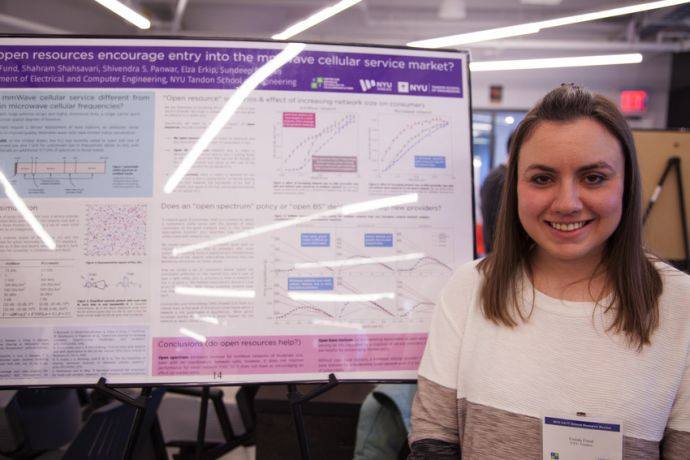
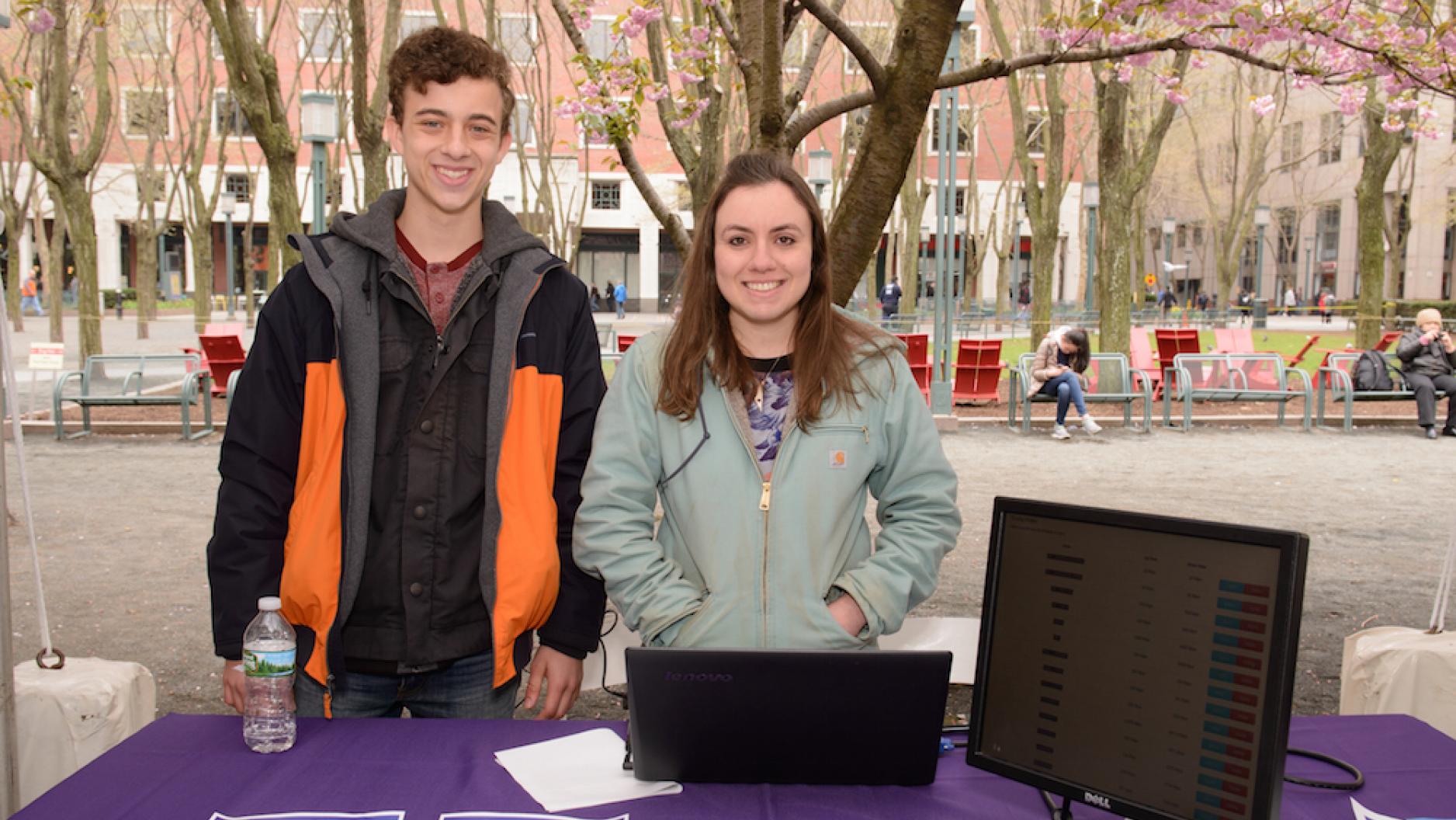
Smith-Salzberg is the first-listed author of the paper, an honor that would be unusual even for an undergraduate student. In “Bridging the digital divide between research and home networks,” he and his co-authors describe efforts to make it easier for researchers to improve the performance of networked applications and services on real-world networks. Their tool, which makes test networks more representative of typical home broadband connections, debuted at IEEE INFOCOM’s International Workshop on Computer and Networking Experimental Research Using Testbeds (CNERT) on May 1, 2017 in Atlanta, Georgia. Smith-Salzberg and his ARISE mentor Fraida Fund, a doctoral candidate in the Department of Electrical and Computer Engineering, also exhibited their work at NYU Tandon’s Research Expo in April.

Smith-Salzberg worked extensively last summer with Fund, who gives him due credit for his contributions. “He did most of the work developing the tool described in the paper over the summer, when he was working with us full-time,” Fund said. “Then, we worked on the paper draft together over the first half of this academic year. Every week, he came to Tandon once a week  after school, and we worked on the text together.”

Smith-Salzberg found his experience in the ARISE program gratifying and encourages anyone lucky enough to take part in the program to make the most of it. “I was treated by everyone at the lab as an equal member of the team,” he said. “I presented at the weekly meetings, and in my last week I presented to a larger group, which included Professor Panwar. This experience at a real workplace environment is very special, and there are not many programs that offer such an opportunity.”

Their research was supported by the National Science Foundation Graduate Research Fellowship Program, the New York State Center for Advanced Technology in Telecommunications (CATT)NYU Tandon School of Engineering’s Center for K-12 STEM Education, and the Pinkerton Foundation.

Learn More about ARISE:

  • The program is for academically strong, 10th and 11th grade New York City. students with a passion for science, technology, engineering, and math.
  • Students participate full time for approximately seven weeks over the summer.
  • The application period opens late fall for the proceeding summer session.
  • Visit the ARISE website for information on how to apply.

NYU Researchers Develop New Paradigm for 5G Emulation

Researchers at CATT and NYU Wireless have built the world’s first wireless emulator suitable for 5G systems that feature massive bandwidths and hundreds of antenna elements. In this unique patented design, the solution emulates not only the wireless channel, but also the beamformers (or phased-arrays) on both the transmitter and receiver devices under test (DUTs). This joint emulation of the beamformer and the wireless channel is the key enabling technology that allows for faster development cycles, while significantly lowering the hardware cost and complexity of the emulator. The project was led by post-doctoral fellow Dr. Aditya Dhananjay, and was supervised by faculty members Dr. Sundeep Rangan and Dr. Dennis Shasha. The project was enabled by a generous hardware donation of commercial off-the-shelf (COTS) components from National Instruments. The NYU researchers are also making the emulator software available to academic researchers for free, along with reference TX and RX DUT software designs.

As the 5G standardization process gathers steam, one of the critical challenges lies with the design and testing of the new generation of wireless systems. A key component of this testing process is channel emulation, wherein a channel emulator is used to simulate a configurable wireless channel between the transmitter and receiver devices under test. An emulator can be configured to reproduce a variety of wireless scenarios such as urban microcell, rural macrocell, mobility patterns, different weather conditions, and so on. Channel emulation offers reproducibility and enables the validation and testing of designs under worst-case scenarios, and is therefore an essential step before the time-consuming and expensive over-the-air (OTA) and field testing.

In the existing emulation paradigm, the transmitter and receiver devices under test (TX and RX DUTs) are connected using cables to a channel emulator as shown in Figure 1. The RF signal vector from the TX DUT (one signal from each antenna element) is cabled through to the emulator. The wireless channel to be emulated is generally described via multipath fading profile which can be configured to reproduce measured traces or standard profiles such as in the 3GPP models. The output from the emulator is the signal vector, which is then cabled through to the RX DUT using one cable for each antenna element.

Basically, the job of a channel emulator is to transform the input signal vector into the output signal vector. Due to the benefits offered, channel emulators have been widely used for Wi-Fi, 3G, and 4G LTE development, and are indeed a staple on any wireless research lab bench. However, there are no commercial emulators available that are suitable for upcoming 5G millimeter wave (mmWave) systems.

These upcoming 5G mmWave systems will differ from existing 4G systems in two main ways: a) the number of antenna elements are increased by an order of magnitude due to the use of mmWave phased arrays; and b) the bandwidths that these systems operate over is also increased by at least an order of magnitude. These differences make the existing emulation paradigm unsuitable for 5G mmWave systems for a variety of reasons. First, phased-array antenna elements cannot be connected to cables. Second, the large number of antenna elements makes the hardware cost of building the emulator prohibitively expensive. Third, the computational complexity is increased by multiple orders of magnitude due to the large number of antenna elements and large bandwidth. These are the reasons that no commercial 5G mmWave emulators exist today. In order to support hundreds of antenna elements and several gigahertz of real-time bandwidth, current designs would need to resort to prohibitively expensive frequency stitching.

The NYU emulator solves these challenges by defining a fundamentally new emulation paradigm for 5G mmWave systems. In this paradigm, the emulator not only emulates the wireless channel, but also the multi-antenna beamformers on both the TX and RX DUTs as contrasted in Fig. 2(a) and 2(b). The TX and RX DUTs share their instantaneous beamforming vectors with the emulator, so that the beamforming operations can be emulated. The TX DUT sends the emulator the pre-beamformed signal as opposed to the post-beamformed signal vector. Symmetrically, the emulator sends the RX DUT the post-beamformed signal as opposed to the output pre-beamformed signal vector.

The emulator is flexible, and can support the signals in baseband, IF, or in RF, depending on the DUT configuration. By combining the emulation of the multi-antenna beamformers on the DUTs with the emulation of the wireless channel (the key patented technology), the computational complexity and hardware cost of the emulator are greatly reduced. Another key benefit in this new emulation paradigm is that researchers can experiment over different theoretical phased-array designs, further accelerating the research and development in protocols at all layers of the protocol stack.

The NYU team has already demonstrated this emulator with 64-element DUTs and more than 2 GHz bandwidth at two major trade-shows: the Brooklyn 5G Summit, and at a workshop at NI Week in Austin. The implementation of this emulator was supported by a very generous hardware donation from NI to NYU.

Yong Liu Named a Fellow of the IEEE

Yong Liu — a professor of electrical engineering at the NYU Tandon School of Engineering and a faculty member of the Center for Advanced Technology in Telecommunications (CATT) and NYU WIRELESS — has been named a fellow of the Institute of Electrical and Electronics Engineers (IEEE), the world’s largest technical professional association, for contributions to multimedia networking. He is the 100th recipient of that honor at NYU Tandon.

Liu, who has published more than 100 papers in major journals and conferences, was recognized for seminal work in the measurement, modeling, analysis, and design of multimedia networking systems, which now dominate online traffic and which crucially impact the performance and stability of the global Internet.

Because most commercial multimedia applications use proprietary protocols and encrypt their data and signaling, there had been very limited public information about their design choices and the Quality of Experience (QoE) delivered to users, and Yong’s research filled this knowledge gap, providing valuable insights into system architecture, design, performance, and network impact. He is also active in the field of peer-to-peer (P2P) technology, which leverages networking, computation and storage resources available on end systems to deliver a wide range of scalable network services and which is now a core component in many modern Internet applications.

Notably, Liu devised novel real-time bandwidth estimation and video adaptation algorithms that were recently adopted by Tencent WeChat, China’s exceptionally popular online social network platform, significantly improving the experience of WeChat’s 650 million monthly active users around the world.

“It is always a proud moment when an august organization like the IEEE elevates one of our faculty members to Fellow status,” Dean Katepalli Sreenivasan said. “This honor indicates the high quality of his research and his commitment to solving real-world problems. I congratulate him on receiving this well-deserved recognition.”

Liu holds a master’s degree from the University of Science and Technology of China and a doctorate from the University of Massachusetts, Amherst. Among his many other honors are a National Science Foundation CAREER Award, given to young researchers who exemplify the role of teacher-scholar, and multiple best-paper awards at such events as the Association for Computing Machinery Internet Measurement Conference and the IEEE Conference on Computer Communications (INFOCOM).

His latest research involves augmented reality and virtual reality, which are predicted to become the next generation of “killer apps” when fifth-generation (5G) mobile is widely available to consumers.

The IEEE is dedicated to advancing technological innovation and excellence for the benefit of humanity. The group has more than 400,000 members around the globe, only a small fraction of whom are honored with the designation of fellow.

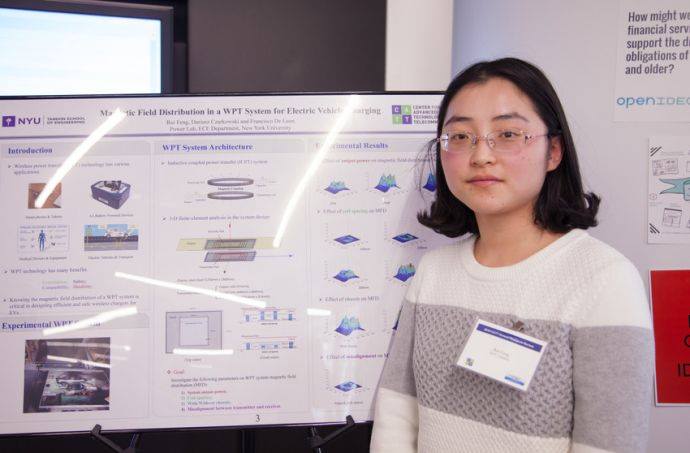
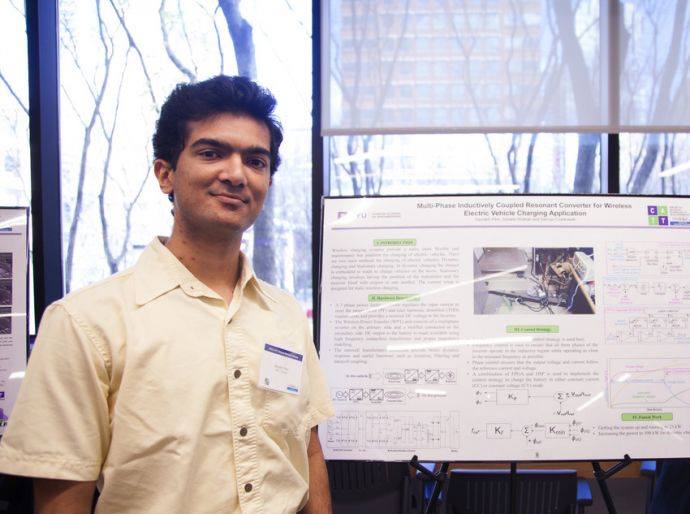
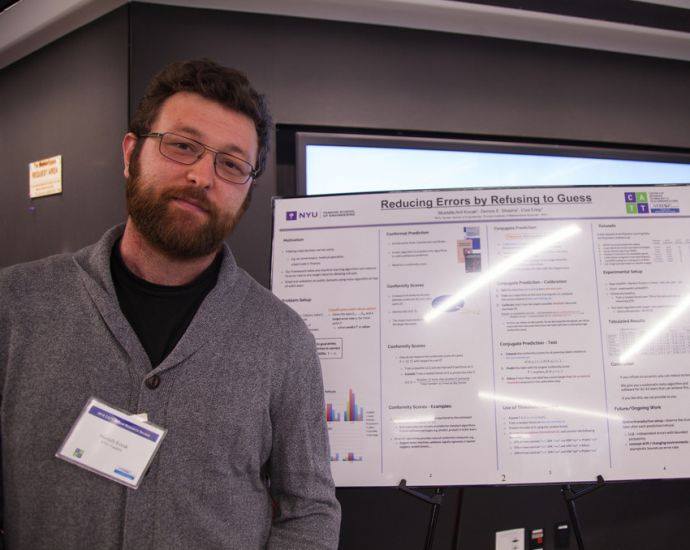
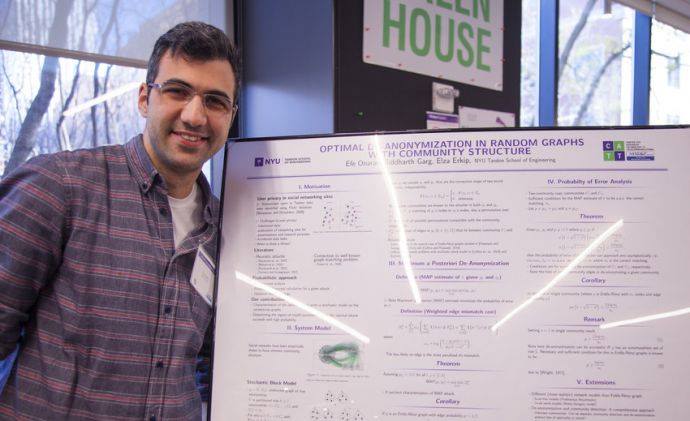
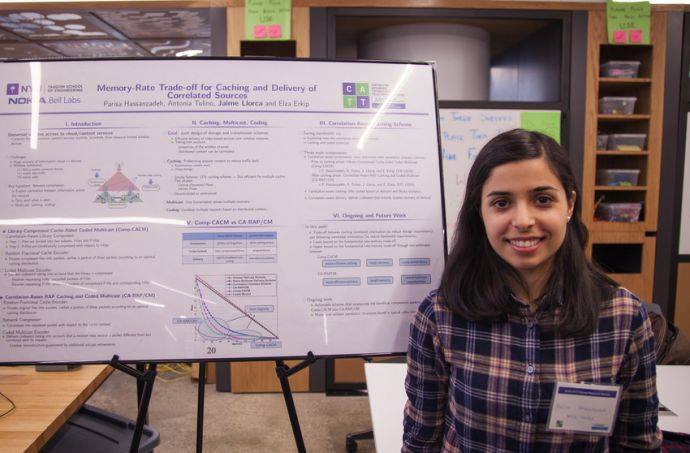
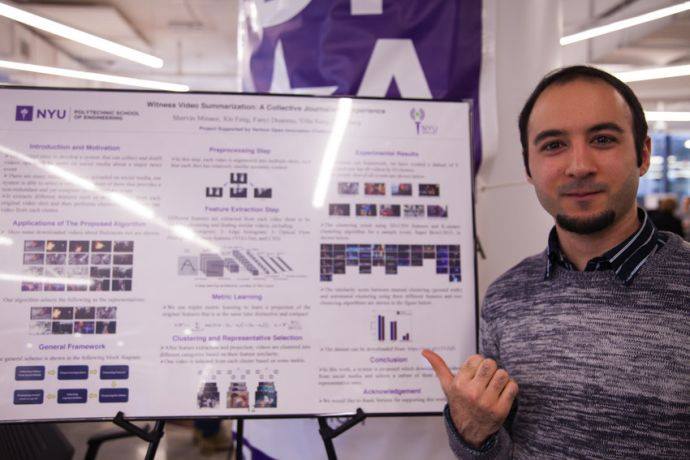
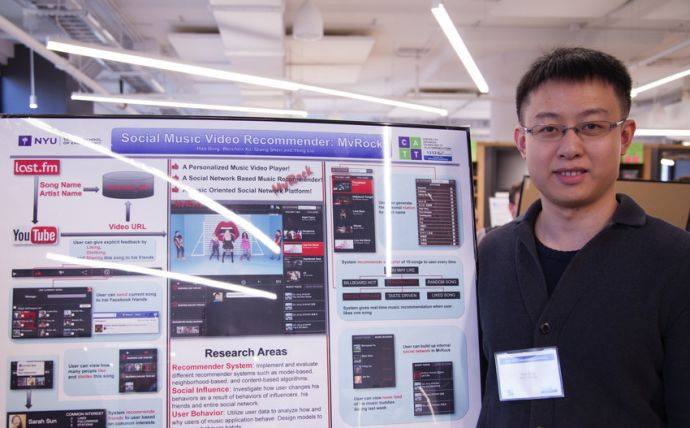
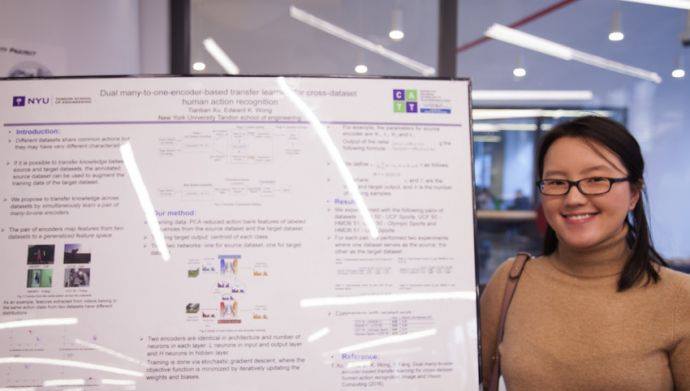
CATT Annual Research Review 2016

Since 1982, CATT has been improving existing technologies and anticipating future challenges, often developing innovative solutions before commercial implications are understood or recognized. CATT’s pioneering work on wireless signal strength prediction has been used to design cellular phone networks all over the world.

The Road to 5G A Presentation by Dr. Roberto Padovani

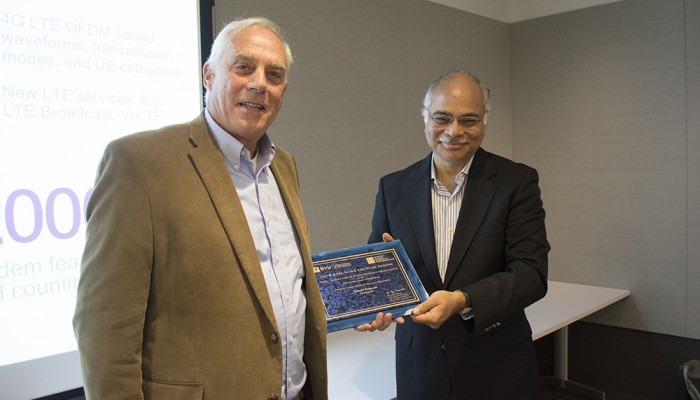
Dr. Roberto Padovani gave the prestigious Jack Keil Wolf Lecture on Wednesday in NYU Tandon’s brand new Makerspace. His presentation, “The Road to 5G,” focused on the standardization efforts the industry is making for next generation cellular technology or 5G.

Dr. Padovani is the Executive Vice President and Fellow at Qualcomm Technologies, Inc. He joined Qualcomm in 1986 and served as the company’s Chief Technology Officer from 2002 to 2011.

Jack Keil Wolf Lecture Series is in honor of an information theorist whose pivotal contributions to digital communication and data storage technology helped shape our networked world, was a member of the Electrical Engineering Department at New York University from 1963 to 1965, and the Polytechnic Institute of Brooklyn (now NYU Tandon School of Engineering) from 1965 to 1973. Dr. Wolf was elected to the National Academy of Engineering in 1993. He was the recipient of the 1990 E. H. Armstrong Achievement Award of the IEEE Communications Society and was co-recipient of the 1975 IEEE Information Theory Group Paper Award for the paper “Noiseless coding for correlated information sources” (co-authored with D. Slepian). He served on the Board of Governors of the IEEE Information Theory Group from 1970 to 1976 and from 1980 to 1986. Dr. Wolf was President of the IEEE Information Theory Group in 1974. He was International Chairman of Committee C of URSI from 1980 to 1983.

Tom Richardson Delivers Jack Wolf Lecture on Liquid Cloud Storage

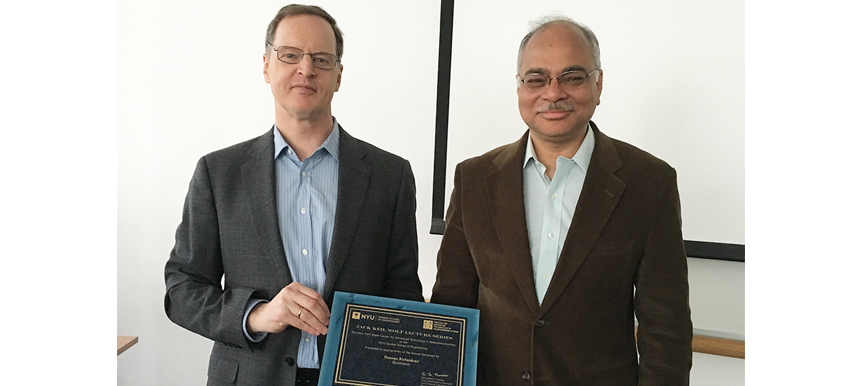
Tom Richardson is Vice President of Engineering and leads R&D at Qualcomm’s New Jersey Research Center. Dr. Richardson gave the prestigious Jack Keil Wolf Lecture at Center for Advanced Technology in Telecommunications (CATT) at NYU Tandon School of Engineering on “Liquid Cloud Storage: A New Approach to Large Scale Data Storage”.  He talked about new large-scale data storage technology developed by a Qualcomm team that handles reliable distributed storage systems consisting of hundreds to tens of thousands of potentially unreliable storage nodes. This solution, developed by his team, offers exceptional object durability, minimizes storage overhead and repair traffic, and provides fast predictable access to data objects.

Dr. Richardson’s main research area is iterative coding systems. He is a co-author, with Ruediger Urbanke, of a book on the subject, entitled “Modern Coding Theory” and was co-winner of the 2002 and the 2013 Information Theory Paper award.  He is a Fellow of the IEEE, co-winner of the 2011 IEEE Koji Kobayashi award and the 2014 IEEE Hamming medal, and a member of the National Academy of Engineering.

Jack Keil Wolf Lecture Series is in honor of an information theorist whose pivotal contributions to digital communication and data storage technology helped shape our networked world, was a member of the Electrical Engineering Department at New York University from 1963 to 1965, and the Polytechnic Institute of Brooklyn (now NYU Tandon School of Engineering) from 1965 to 1973. Dr. Wolf was elected to the National Academy of Engineering in 1993. He was the recipient of the 1990 E. H. Armstrong Achievement Award of the IEEE Communications Society and was co-recipient of the 1975 IEEE Information Theory Group Paper Award for the paper “Noiseless coding for correlated information sources” (co-authored with D. Slepian). He served on the Board of Governors of the IEEE Information Theory Group from 1970 to 1976 and from 1980 to 1986. Dr. Wolf was President of the IEEE Information Theory Group in 1974. He was International Chairman of Committee C of URSI from 1980 to 1983.

Funding Renewed for the Center for Advanced Technology in Telecommunications and Distributed Information Systems

The New York State’s Empire State Development’s Division of Science, Technology and Innovation (NYSTAR) has renewed funding for one of its longest-running research centers, the Center for Advanced Technology in Telecommunications and Distributed Information Systems (CATT).

Part of the NYU Tandon School of Engineering, CATT promotes cutting-edge research and development programs based upon the industry standards and academic expertise. Its goal is to create economically viable new technology through entrepreneurship.

NYSTAR’s decision to renew funding for CATT demonstrates the State’s confidence in the center directed by Shivendra Panwar, professor and department chair in the Electrical and Computer Engineering Department at the NYU School of Engineering.

The $4.45 million — to be distributed to CATT over the next five years — will be used to fund projects in the center’s three main areas: wireless technology, cybersecurity, and data science.

Through the affiliated NYU WIRELESS research center, CATT will extend its efforts revolving around the emerging fifth generation (5G) cellular technology. The research in cybersecurity — conducted jointly with the NYU Center for Interdisciplinary Studies in Security and Privacy — will concentrate on resilient networks, particularly in finance. In response to the industry preoccupation with big data, the center will also continue to improve its work on media applications.

New York State Renews Funding for NYU Telecommunications Research Center

The New York State’s Empire State Development’s Division of Science, Technology and Innovation (NYSTAR) has renewed funding for one of its longest-running research centers, the Center for Advanced Technology in Telecommunications and Distributed Information Systems (CATT).

Part of the NYU Tandon School of Engineering, CATT promotes collaborative R&D between industry and researchers at New York University and Columbia University, with the goal of creating entrepreneurial and economically viable new technology. Shivendra Panwar, professor and department chair in the Electrical and Computer Engineering Department at NYU Tandon, directs the center. The five-year funding renewal will help CATT secure matching funds.

The $4.45 million will be used to focus on three main areas: wireless technology, cybersecurity, and data science. Through the affiliated NYU WIRELESS research center, CATT will continue its efforts centered on the emerging fifth generation (5G) cellular technology. In light of major hacking scandals, cybersecurity remains at the forefront of industry needs, and research will center on resilient networks, particularly for the financial industry. Data science has grown tremendously in importance as companies look for ways to get an advantage over competitors. In addition, CATT will continue to work in media applications.

Founded in 1983, CATT was one of the first Centers for Advanced Technology in the NYSTAR program. Over the years it has played a part in making Brooklyn’s MetroTech Center an important technology hub. More recently, CATT researchers played key roles in the growth of the Internet industry. It provided the foundation for the research center that evolved into NYU WIRELESS, recently ranked the world’s top university hub for 5G, and for the NYU Center for Interdisciplinary Studies in Security and Privacy, which expands the study of information security beyond technology to human, business, and societal issues.

“The CATT has played an important role in shaping the research culture of the NYU Tandon School of Engineering and furthering the transfer of technology from university laboratories to practical applications,” said NYU Tandon Dean and President Katepalli R. Sreenivasan. “Winning this funding amidst rigorous competition indicates the value placed by our sponsors on the work being done in our School. We congratulate Professor Shivendra Panwar and all the researchers of the CATT, and thank NYSTAR and the State of New York for their longtime support of this important economic engine.”

In addition to its three core research areas, CATT also helped provide a foundation for the NYC Media Lab, a consortium that includes the New York City Economic Development Corporation, New York University, Columbia University, The New School, CUNY, Pratt Institute, and industry partners. CATT’s experience partnering industry and academic research for economic development in the tech sector was particularly useful getting the funding proposal for the NYC Media Lab accepted. Panwar is its Faculty Director.

Current industry partners for CATT include InterDigital Inc., Consolidated Edison Company, Verizon, L3 Communications, IBM, American International Group (AIG), AT&T, MLB Advanced Media, Google, Intel Corporation, Samsung, McGraw Hill Global Education, and Boeing Company.

Smart Grid, Wireless Hospitals, and Digital Media on Agenda for Annual CATT Research Report

Polytechnic Institute of NYU’s Center for Advanced Technology in Telecommunications (CATT) will conduct its 27th annual Research Report this Friday, October 30. CATT research faculty will present research to board members and sponsors will outline the state of digital technology in some of the most promising areas of research: the smart grid needed for green energy; wireless infrastructure to deliver medical treatment; cyber security, and the future of digital media.

Faculty, students, journalists, and the public are invited to attend lectures and meet some of the leading industry and academic experts in the fields.

CATT celebrates 25 years of innovation, invention and entrepreneurship

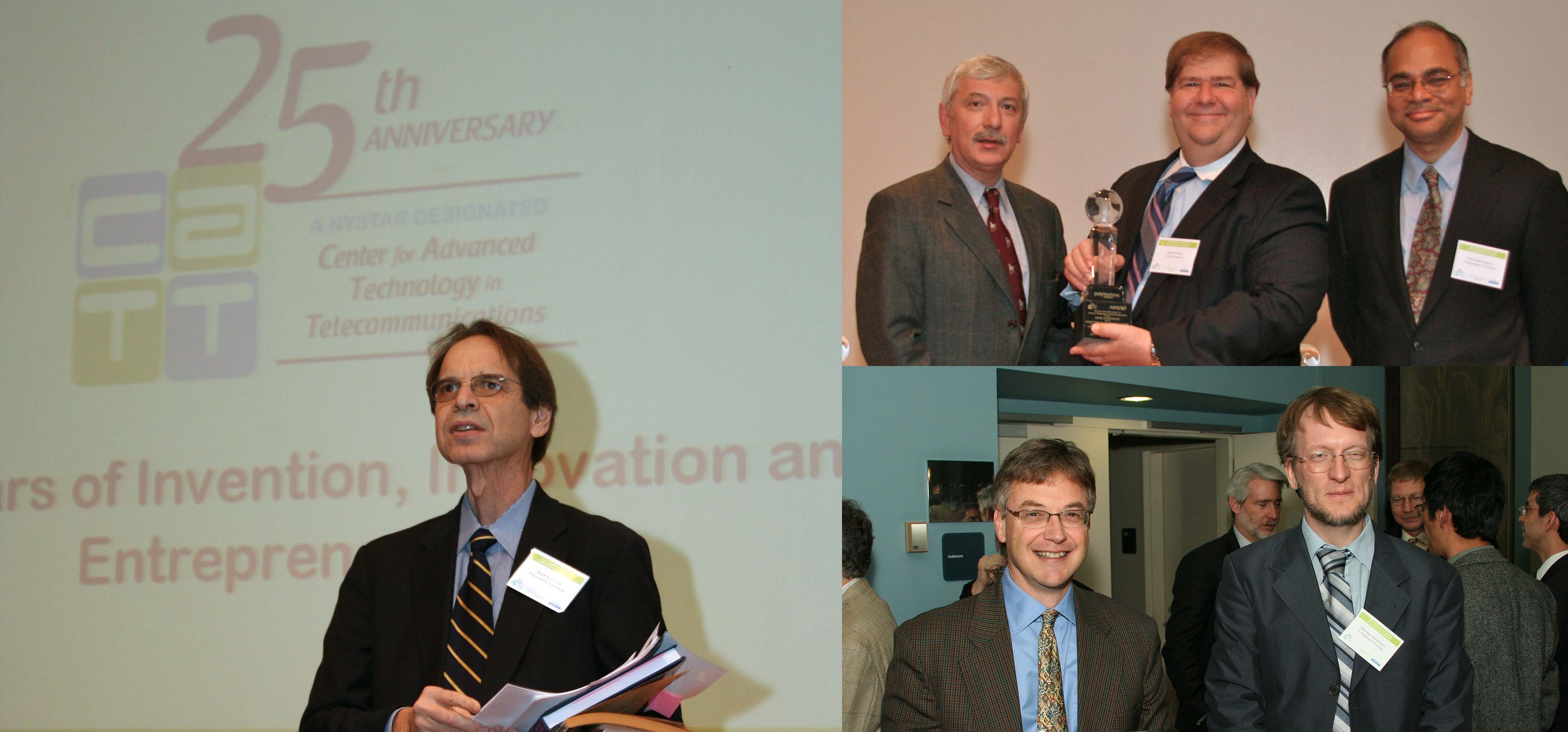
For 25 years, Polytechnic University’s Center for Advanced Technology in Telecommunications (CATT) has played a key role in developing the technologies that drive “the information age.” On Thursday, November 8, members of the Poly community and major IT and telecommunications companies gathered to celebrate those first 25 years, discuss current research, and take a look forward.

Since its inception as one of the original four Centers of Advanced Technology funded by The New York State Foundation for Science, Technology and Innovation (NYSTAR) and its predecessor, the Office for Science and Technology, CATT’s mission has been to stimulate economic development in the state of New York. CATT achieves its mission by commercializing new technologies through research, education, and community outreach.

CATT’s industry partnerships have led to breakthroughs in wireless communication, networking, cyber-security, and other areas impacting businesses and consumers. For example, its work in the early 1980s involving packet switching was essential to the development of the Internet. Today, its pioneering work in cooperative communications and peer-to-peer video streaming is set to be a part of the next wave of information sharing.

CATT’s 25th anniversary celebration included opening remarks by University Provost Erich Kunhardt, research presentations, and three panel discussions: “Cyber-security: Three Things that Keep You Up at Night,” “Wireless and the Convergence with Digital/Traditional Media” and “Entrepreneurship and High Technology in NYC.” The day concluded with an awards ceremony with remarks by University President Jerry Hultin, and a gala celebration dinner.

CATT 25th Anniversary Award Recipients
Technological Impact Award:
AFP Imaging Corporation, InterDigital, Inc., Verizon Communication, Inc.
Innovation in Technology Award: Motorola, Inc., NYSE Euronext, Philips Research North America, Thomson Technology, LLC
Lifetime Technology Innovation Award: Henning Schulzrinne
Lifetime Entrepreneurial Achievement Award: Yechiam Yemini